

Why Might Someone Need to Walk on a Roof?
Some residents in Rensselaer, NY might find themselves needing to access their roof for minor inspection, to clear gutters, or to check for visible storm damage. Because these tasks can be hazardous, knowing the basics of roof safety is crucial before taking any steps upward.
What Are the Main Risks Involved in Walking on Residential Roofs?
Walking on a roof presents clear risks, primarily falling, slipping, or causing damage to the roof itself. Even a moderate pitch can lead to sudden loss of balance, especially during the wet or icy seasons common in this region. Roof materials can be fragile or unexpectedly slick due to moss, granules, or morning dew.
How Should Someone Prepare Before Going Up?
Careful planning reduces risk significantly. Area households should:
- Check the weather: Roofs in Rensselaer are particularly dangerous when wet, icy, or windy. Wait for a dry, calm day.
- Wear proper shoes: Opt for soft-soled, rubber-bottomed footwear with good grip—avoid sandals or heavy boots.
- Gather supplies on the ground: Organize and secure small tools, gloves, and any materials in a pouch or tool belt.
- Inspect your ladder: An extension ladder should be set firmly on level ground at a 4:1 angle (one foot out for every four feet up). Ladders should extend at least three feet above the gutter or roofline.
Is It Safe for Everyone to Walk on the Roof?
Some situations make roof-walking especially unsafe, regardless of preparation. Individuals who are not comfortable with heights, have balance issues, or lack proper footwear should not attempt it. If the roof pitch is steep, covered in debris, or in visible disrepair, it’s prudent to stay off entirely. For households with two-story homes or older structures, the risks rise, and staying grounded is often the safest choice.
How Can Residents Navigate Common Roof Types and Features Locally?
Housing in Rensselaer features many traditional asphalt shingle and low-slope roofs, but older homes occasionally have slate or standing seam metal. Each presents specific issues:
- Asphalt Shingles: Can be granulated and slippery, especially when wet. Avoid stepping on loose or curled shingles.
- Metal: Extremely slick, even with minor condensation. These roofs are best avoided unless absolutely necessary.
- Slate or Tile: Fragile and prone to cracking under concentrated pressure; step only on the lower third of each tile, spreading your weight and moving slowly.
For all types, avoid stepping near eaves, valleys, and ridges where material is more prone to damage.
What Local Conditions Increase Risk?
Rensselaer’s harsh winters and humid summers leave many roofs with occasional moss, lichen, or damp patches that aren’t always easy to spot. These spots are much more slippery than shingles or metal look from ground level. Frozen gutters and ice dams also create unseen hazards, especially before mid-morning when surfaces can still be slick. In fall, leaves mask hazards. Similarly, spring pollen can leave a powdery, slippery film on shingles.
What Are Some Practical Do’s and Don’ts for Safe Movement?
Do:
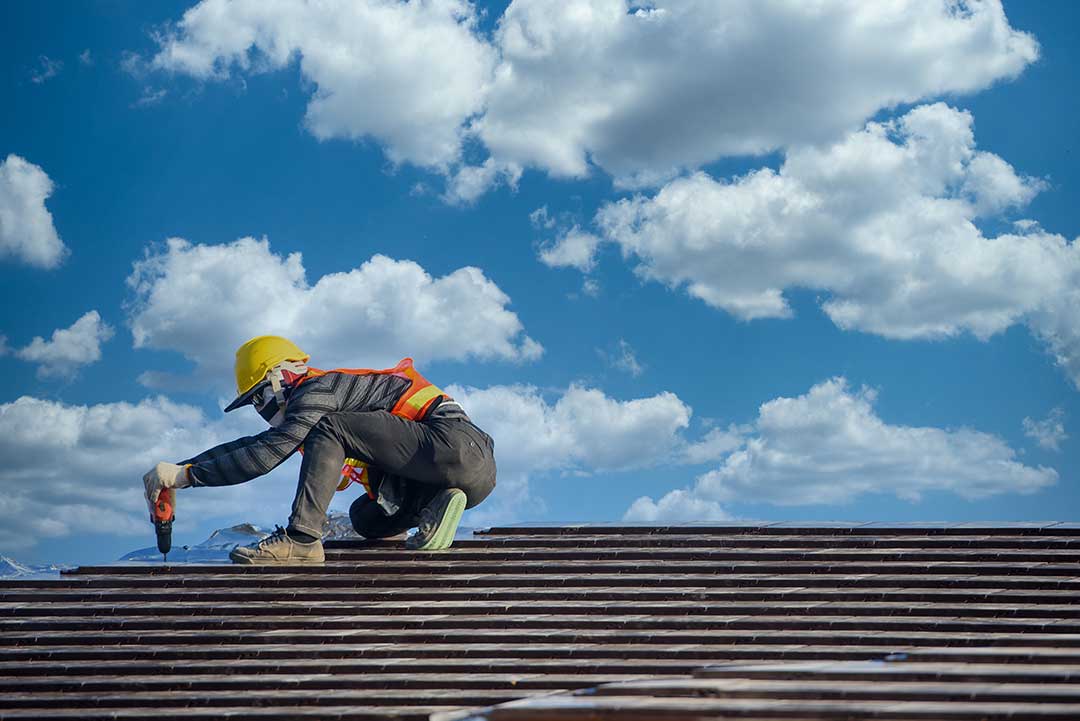
- Walk slowly, keeping your center of gravity low.
- Step flat-footed; avoid sudden movements or jumping between surfaces.
- Use your hands to steady yourself; if comfortable, crawl on all fours if you feel insecure.
- If available, use a fall-protection harness anchored to a structural point on the house.
Don’t:
- Rush tasks or reach too far out from your position.
- Carry heavy, awkward, or unbalanced objects up to the roof.
- Walk backwards or turn too quickly.
- Ignore signs of weak decking (spongy or creaking spots).
How Can Residents Minimize Risk When Cleaning Gutters or Minor Debris?
Often, gutter cleaning is what sends residents onto their roofs. It is safer to use a sturdy ladder and work from below whenever possible. For single-story homes, a ladder stabilizer can help prevent sideways movement and damage to gutters. Clear away debris gently, using lightweight tools to reduce unsteadiness. For persistent moss, sweep, never scrape, to avoid shingle damage.
What Should You Do If You Feel Unsafe While on the Roof?
If at any point you feel unsure or lose your footing, stop moving and crouch low, keeping three points of contact (both feet and one hand, for example) on the surface. Do not attempt to stand or hurry off the roof; instead, backtrack calmly to your access point if you can do so safely. Help from a household member on the ground—communicating with clear eye contact or vocal cues—can also be reassuring.
