
What does poor roof installation look like?
Poor installation often reveals itself through uneven roofing materials, recurring leaks, loose flashing, drainage problems, or moisture in the attic. Some defects are visible soon after the work is completed, while others appear during the first heavy rain, freeze-thaw cycle, or snow season.
A roof can look new from the ground and still have serious installation problems beneath the surface. Roofing is a system made up of shingles or panels, underlayment, flashing, ventilation, fasteners, and roof decking. A failure in any one part can shorten the life of the entire assembly.
For households in Rensselaer, NY, seasonal moisture, winter snow, ice formation, wind, and repeated temperature changes can expose installation weaknesses quickly.
Are uneven shingles a sign of bad workmanship?
Yes. Shingles that appear crooked, wavy, buckled, or inconsistent may indicate poor layout, inadequate fastening, damaged materials, or installation over an uneven deck.
Common visual warning signs include:
- Shingle courses that do not form straight horizontal lines
- Tabs or seams that do not align consistently
- Raised corners, ripples, or bubbles
- Shingles that remain lifted after warm weather
- Exposed nail heads in areas where they should be covered
- Excessive gaps around roof edges, valleys, or penetrations
A small amount of visual variation may occur because of the roof design or lighting. However, widespread waviness or rows that visibly drift across the roof should not be dismissed as cosmetic. Water can collect beneath raised areas, and wind can gradually loosen improperly secured materials.
What problems occur when shingles are nailed incorrectly?
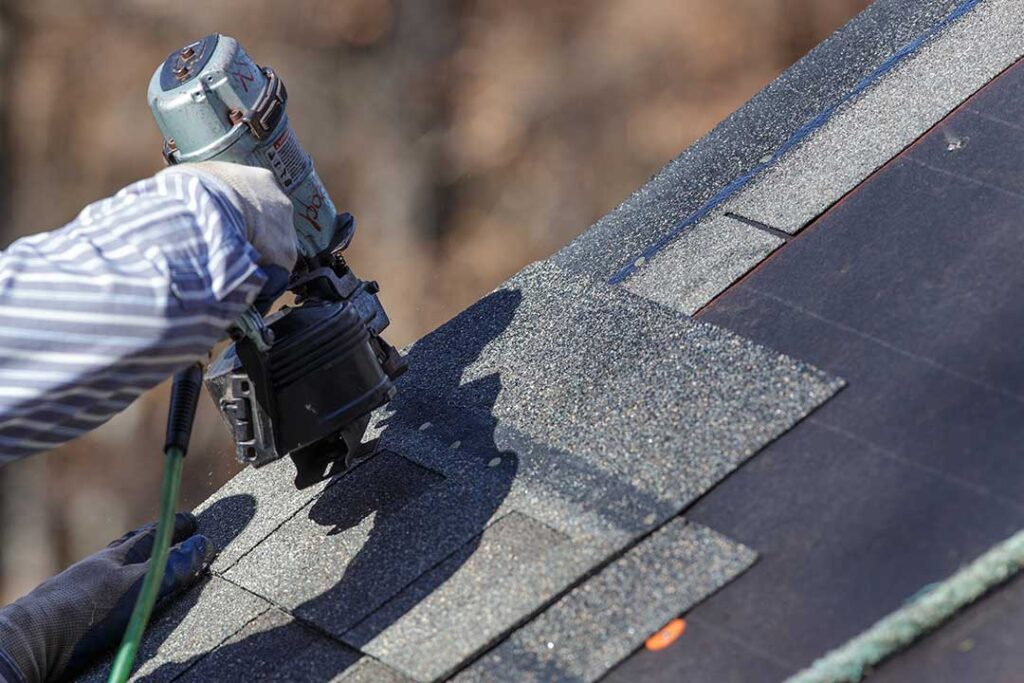
Fasteners must be placed in the correct location and driven to the proper depth. Nails installed too high, too low, too close to an edge, or at an angle may fail to hold the shingle securely.
Overdriven nails can cut into the shingle mat and weaken the material. Underdriven nails may leave the shingle raised. Missing fasteners can allow wind to lift the roofing during storms.
After installation, loose shingles, scattered pieces in the yard, or premature loss of tabs may suggest fastening problems. A roof that sheds granules is not automatically defective, but large amounts of granule loss soon after installation can indicate rough handling, foot traffic, or damaged shingles.
Some fastening defects are not visible from the ground. A safe inspection from the attic or a qualified roof evaluation may be needed, especially if the roof has already experienced wind damage.
Why is flashing one of the most important installation details?
Flashing directs water away from locations where the roof meets another surface or where an object passes through it. These areas include chimneys, plumbing vents, skylights, walls, roof valleys, and edges.
Poor flashing installation may include:
- Metal pieces that are too short or improperly overlapped
- Heavy, uneven applications of roofing cement used in place of proper detailing
- Gaps around vent pipes or chimneys
- Flashing installed on top of siding without creating a proper water-shedding transition
- Damaged flashing reused during a reroofing project
- Valley materials that are wrinkled, exposed, or poorly aligned
Leaks from flashing problems may not appear directly below the defect. Water can travel along roof decking, rafters, insulation, or wall cavities before reaching the ceiling. That is why a stain in one room does not necessarily identify the exact entry point.
What are signs that roof edges and valleys were installed poorly?
Edges and valleys receive concentrated water flow and are exposed to wind and ice. Installation problems in these areas can lead to leaks even when the main roof surface appears sound.
At roof edges, look for lifted shingles, missing edge materials, exposed underlayment, or gutters mounted in a way that allows water to run behind them. The lower edge should direct water into the drainage system rather than behind the fascia or into the roof structure.
Valleys should create a clear, continuous path for water. Warning signs include exposed nails, inconsistent cuts, open gaps, shingle corners that block drainage, or visible debris collecting in the channel.
In snowy parts of the region, poorly detailed eaves can also be vulnerable to ice dams. Ice dams are influenced by snow, outdoor temperatures, attic heat, air leakage, and ventilation. They are not proof of one specific installation error, but repeated ice-related leakage deserves investigation.
Can poor attic ventilation indicate an installation problem?
Yes. A newly installed roof can still perform poorly if intake and exhaust ventilation are blocked, missing, or improperly balanced.
Possible signs include:
- Condensation or frost on the underside of the roof deck
- Damp insulation
- Mold-like surface growth caused by persistent moisture
- Rusted nails or metal components in the attic
- Excessive heat buildup during summer
- Premature shingle deterioration
- Paint peeling or ceiling stains near the upper portions of rooms
Ventilation should allow air to enter near the lower roof edges and leave near the highest practical point. Exhaust vents alone do not necessarily solve the problem. Blocked soffit vents, insulation covering air pathways, or poorly placed vents can limit airflow.
Attic moisture can also come from bathrooms, kitchens, dryers, or air leakage from the living space. A ventilation concern should therefore be evaluated alongside indoor moisture sources rather than blamed on the roof automatically.
What indoor signs suggest a roof installation defect?
Interior evidence is often easier to notice than exterior defects. Watch for new or recurring:
- Brown or yellow ceiling stains
- Damp drywall near exterior walls
- Peeling paint or wallpaper
- Musty odors in upper rooms
- Wet insulation
- Water marks around skylights, chimneys, or vent pipes
- Drips during rain or after snow begins to melt
A stain that appears only during wind-driven rain may point to flashing, edge, or wall-transition problems. A stain that appears after cold weather may relate to ice buildup, condensation, or a leak that becomes active during thawing.
Do not cut into a stained ceiling while it is wet unless there is an immediate safety reason. Water may be pooled above the surface, and electrical components could be nearby.
How can a homeowner distinguish installation defects from normal aging?
Timing is a useful clue. Problems that appear within the first few months or during the first major storm may indicate installation, material, or underlying deck issues. Problems that emerge after many years may be related to normal aging, weather exposure, poor ventilation, deferred maintenance, or storm damage.
The distinction is not always obvious. A roof may have been installed over damaged decking, old flashing, or inadequate ventilation. In that situation, the visible problem may not originate from the shingles themselves.
Keep photographs, invoices, product information, inspection records, and dates of leaks. Documentation can help establish whether symptoms developed immediately after installation or gradually over time.
When does a roof problem require prompt attention?
Active water entry, sagging decking, exposed electrical components, large areas of missing roofing, or structural movement should be treated as urgent safety concerns. Avoid walking on steep, wet, icy, or damaged roof surfaces.
A roof inspection is especially appropriate when several warning signs appear together, such as uneven shingles, ceiling stains, loose flashing, and attic moisture. A careful assessment should examine the roof covering, fasteners, flashing, underlayment, ventilation, drainage, and decking rather than focusing only on the most visible defect.
Understanding these signs helps residents identify possible installation problems early, document changes accurately, and avoid confusing a surface blemish with a deeper roof-system failure.
